São Miguel · Azores

Suit up.
Open a hive.
Taste the Azores.

Join us in our restored São Miguel meadow for a hands-on beekeeping experience. Step inside the hive and discover the raw flavor of Azorean biodiversity.

Wed & Fri
10:30 · by appointment
€37.50 adults
€27.50 children
A pedagogical apiary

A meadow before it was a refuge.

Apiário Margaridas began in 2023 as a project that crosses honey production, environmental education, and nature tourism — a pedagogical apiary built to make the case, in plain sight, that bees and biodiversity matter and that habitats can be rebuilt.

It started with a piece of old pasture in Água de Pau. We reconverted it into a refuge of native and melliferous plants — a living classroom where visitors can see, in practice, how a place changes when you give it back to the pollinators.

Today the project also produces honey through partnerships with a biological farm and an agroforestry project on the island. Different sites, the same idea: produce honey by improving the place it comes from.
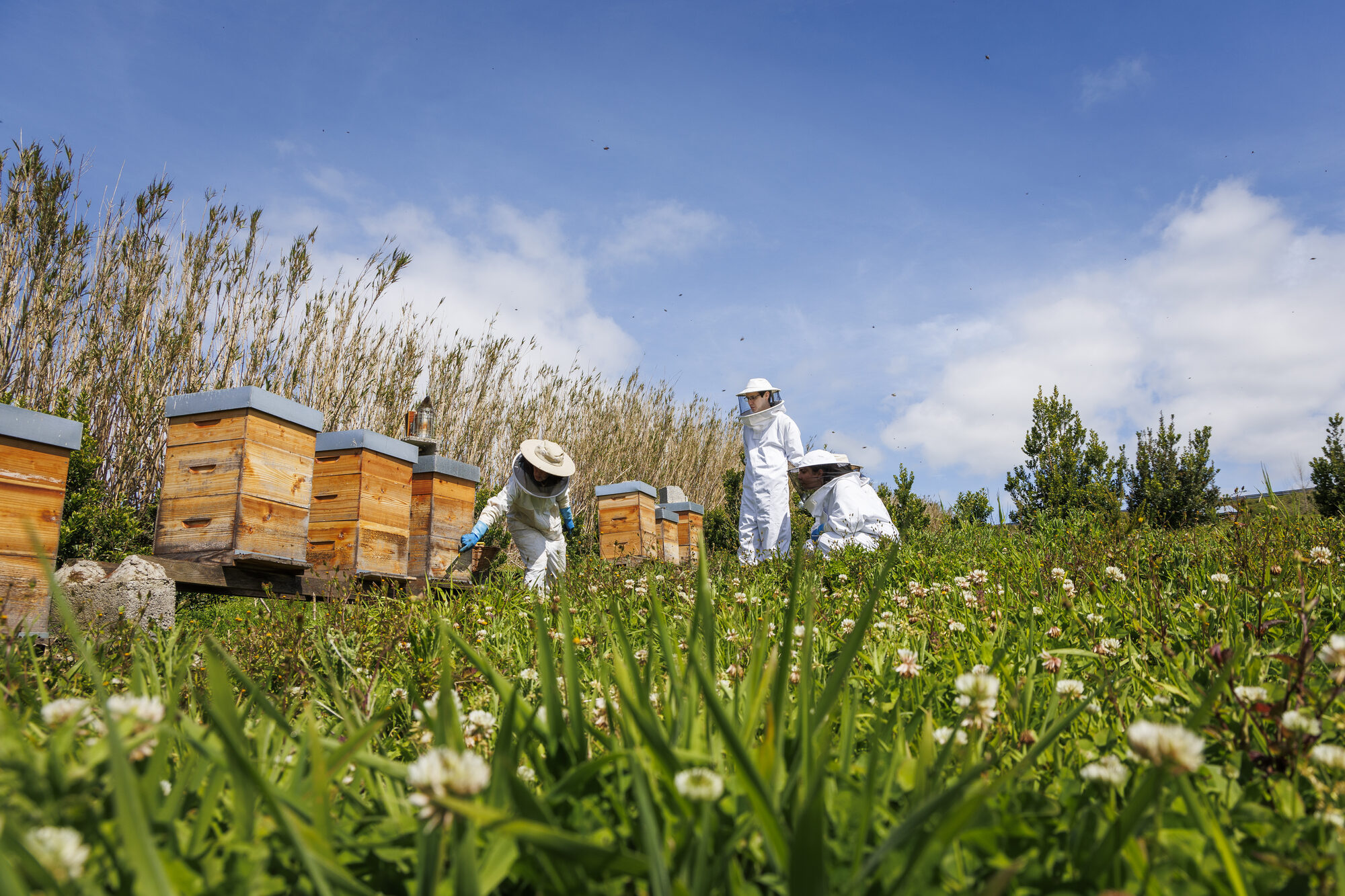
The apiary in the meadow, hives lined up among white clover under a blue Azorean sky
The Pedagogical Apiary Água de Pau, Lagoa — a pasture reconverted into a refuge of melliferous plants.
The visit

Step into a beekeeper's suit.

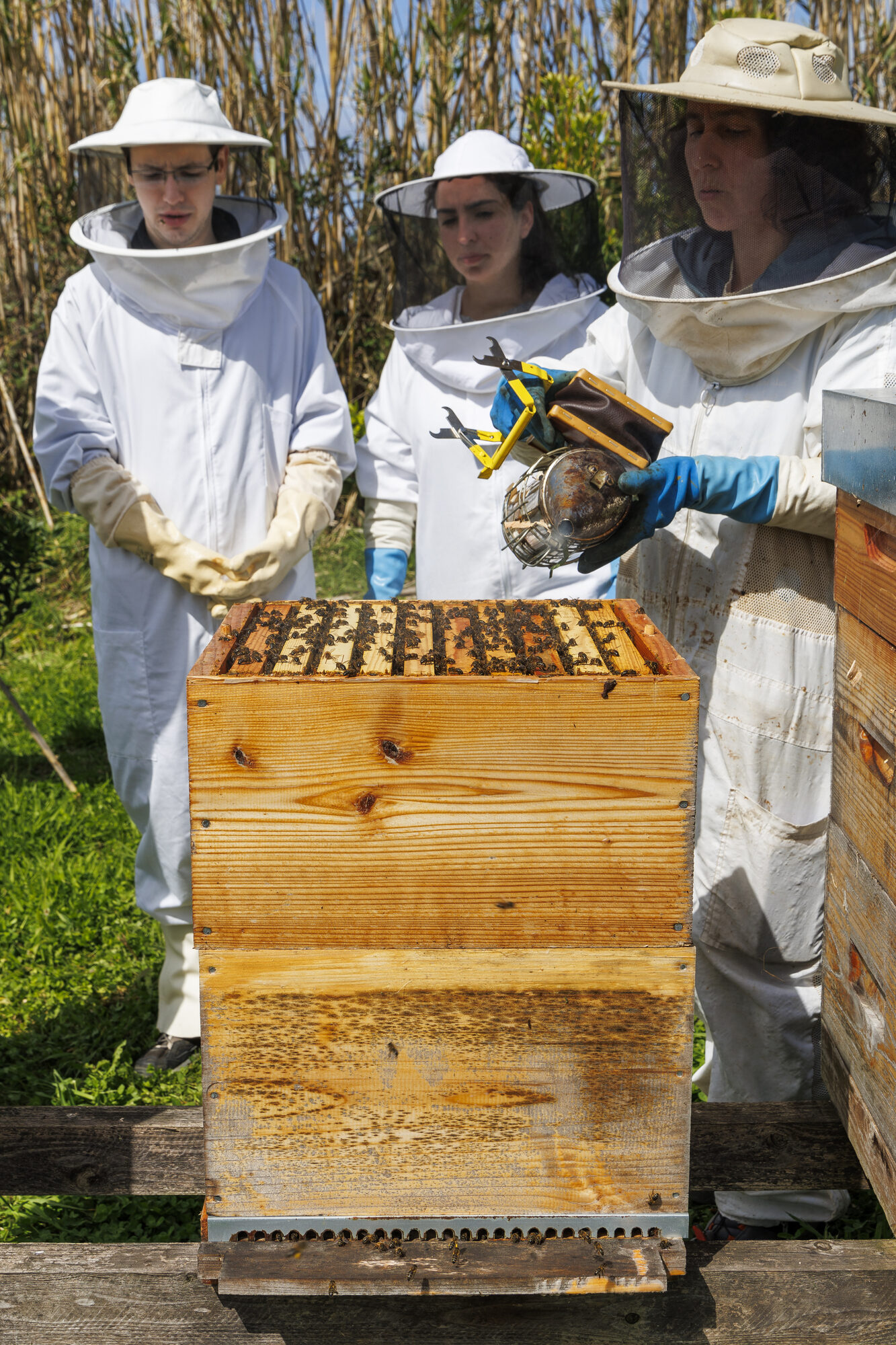
You're not a visitor — you're part of the day. We start with a briefing on bee biology and safety, walk to the hives together, and open them. With a bit of luck, you'll find the queen.

Carolina with two visitors in beekeeping suits, looking into an open hive
01 — Suit up

Briefing & safety

A short talk on the biology of the colony — who does what, why bees behave the way they do, and how to be calm around them.

02 — Approach

Walk to the hives

Through the meadow, smoker in hand. Bees in flight overhead. By now the suit feels less strange.

03 — Open the hive

Read the colony

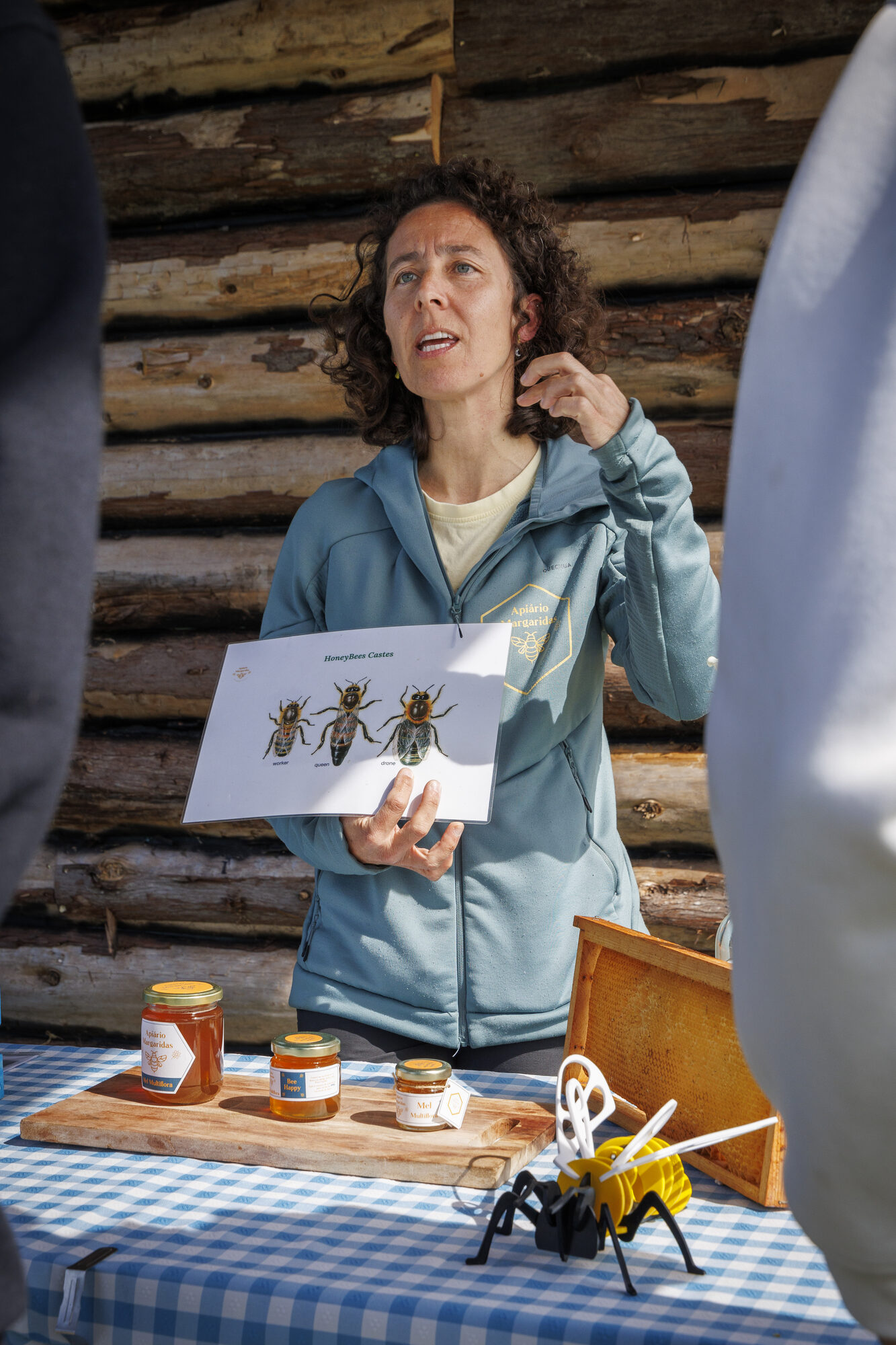
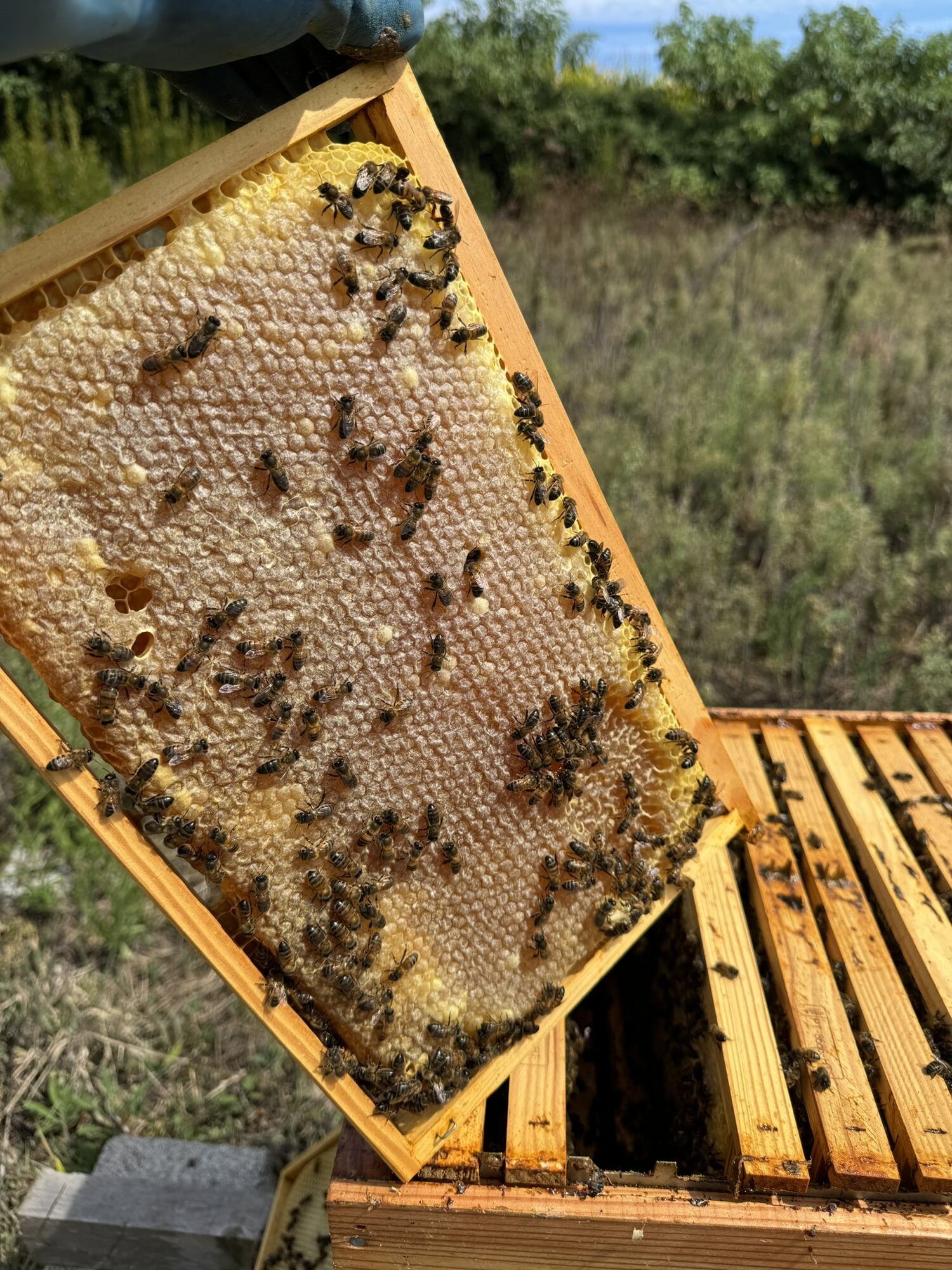
Lift a frame. Identify the castes — workers, drones, the queen if she shows herself. Watch the comb at work.

04 — Taste

The honey

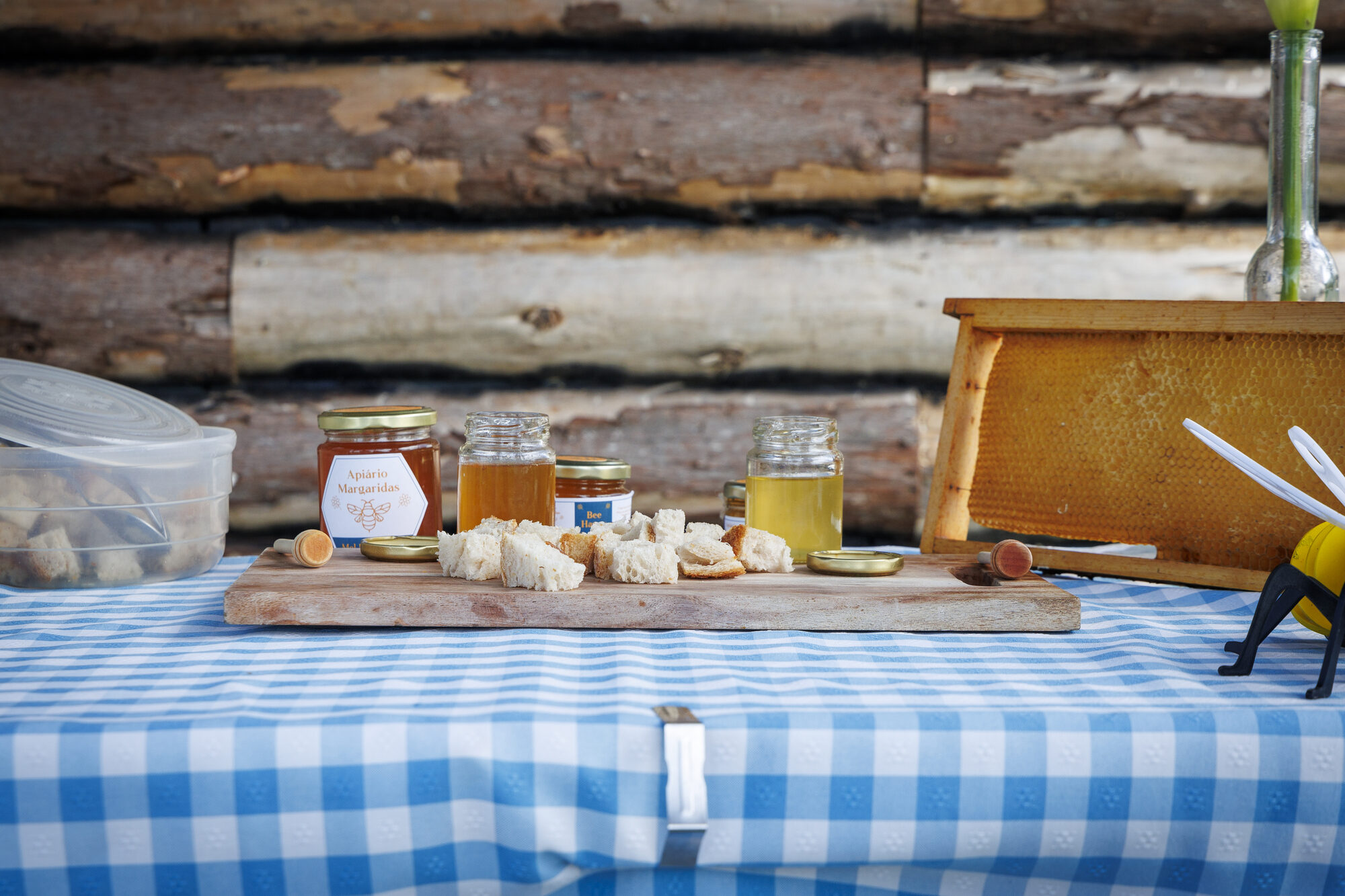
Back at the table, the bees send you off with a tasting of their honey, on bread, under the Azorean sky.

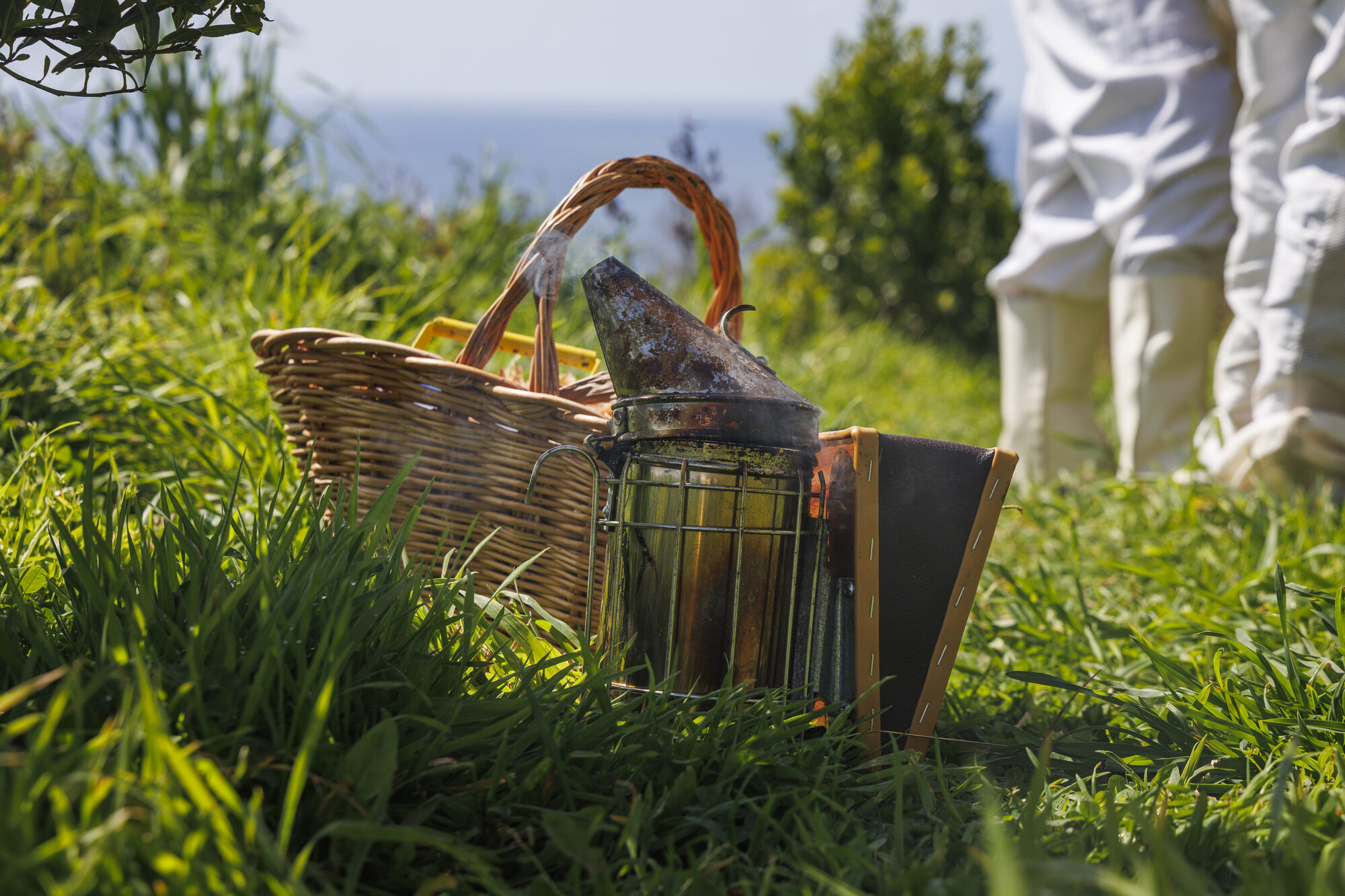
A smoker beside a wicker basket on the grass, with the ocean visible in the distance
Practical

What to expect.

Small group, outdoor only. No frills, no fuss. Dress for Azorean weather and you'll be fine.

When
Wednesdays & Fridays, 10:30By appointment — other days possible on request
Where
Canada da AmoreirinhaÁgua de Pau, Lagoa, São Miguel
Duration
1h30 to 2h
Price
€37.50 adults€27.50 children under 12
Good to know The experience is fully outdoors. There is no bathroom or covered shelter on site, so dress for the weather and stop by a loo before you come. Suits are provided.
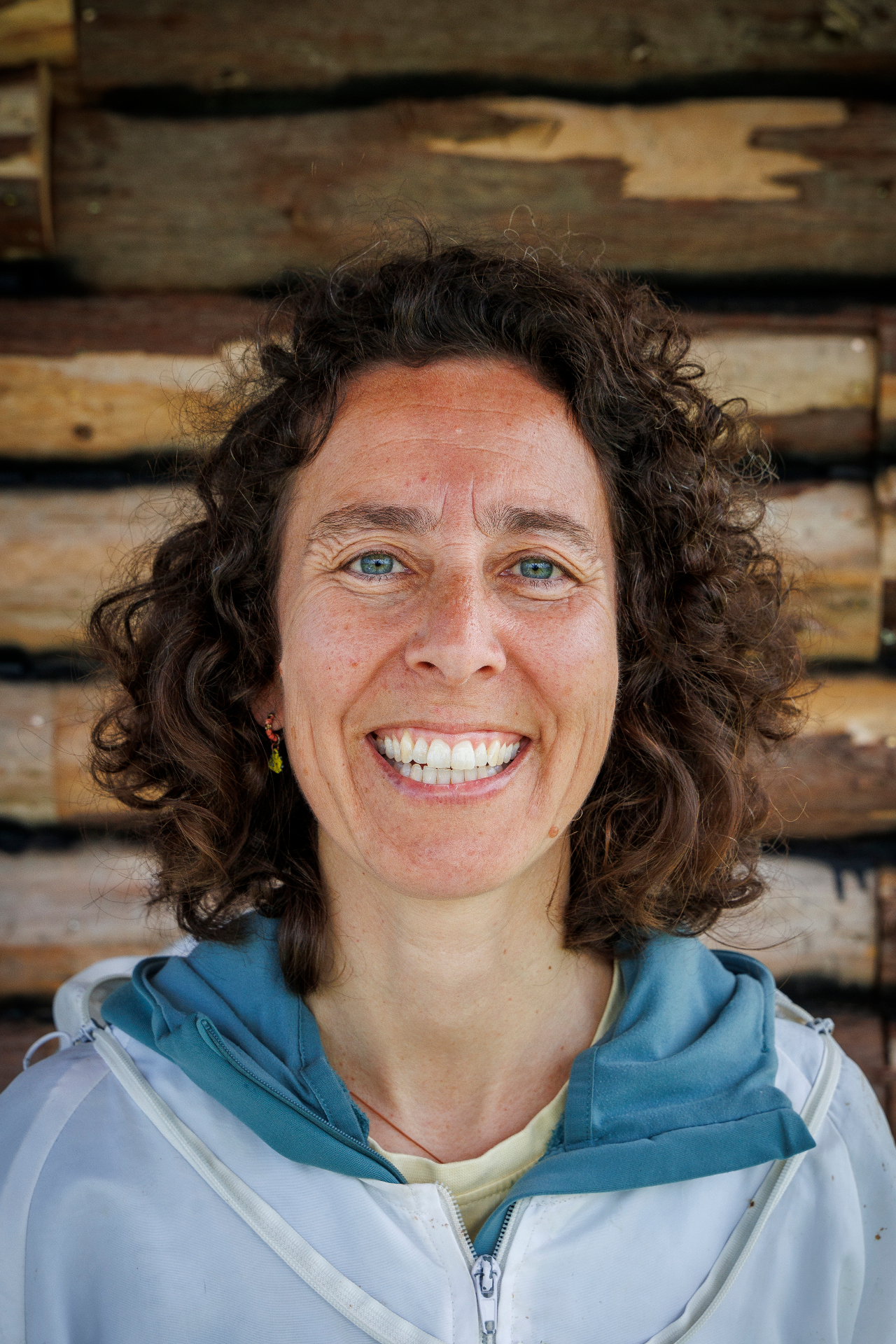
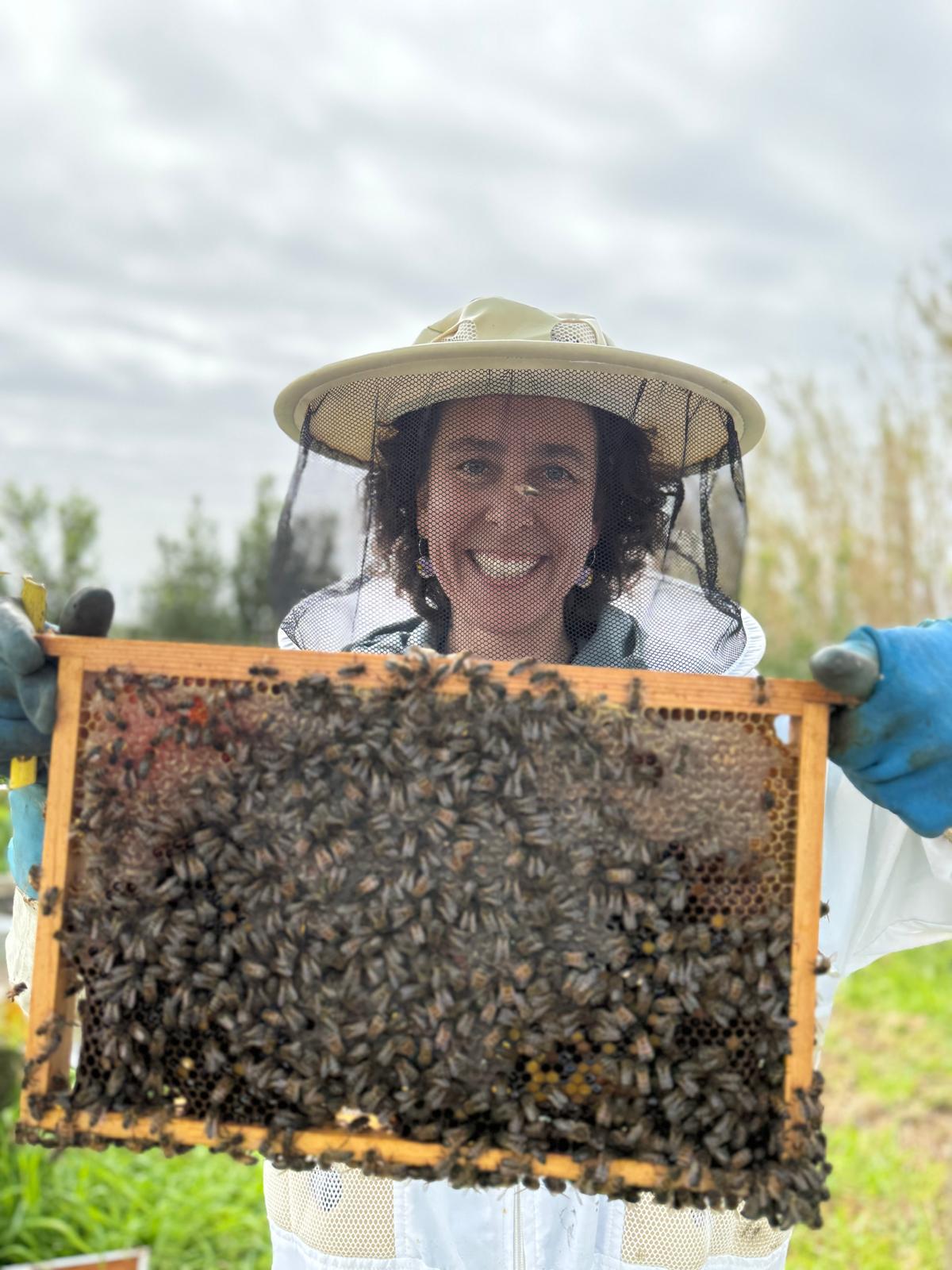
Carolina Ferraz, close-up portrait against a firewood background
The beekeeper

Meet Carolina.

Born in Rio de Janeiro, raised in Porto, Carolina has lived in the Azores since 2009 — where she found the territory and rhythm of life that let her build personal and professional roots.

With a degree in Environmental Sciences and a postgraduate in Ecology, Territory and Environment, she spent over a decade in science and technology communication. That training shapes how she now communicates nature, sustainability, and science through beekeeping.

She'll be the one giving you the briefing, opening the hive, and pouring the honey at the end.

Background
Environmental Sciences · Science communicator
Languages
Portuguese · English
From the apiary

From the apiary.

Honey and beeswax produced at the apiary, by bees that forage the meadow we built for them.

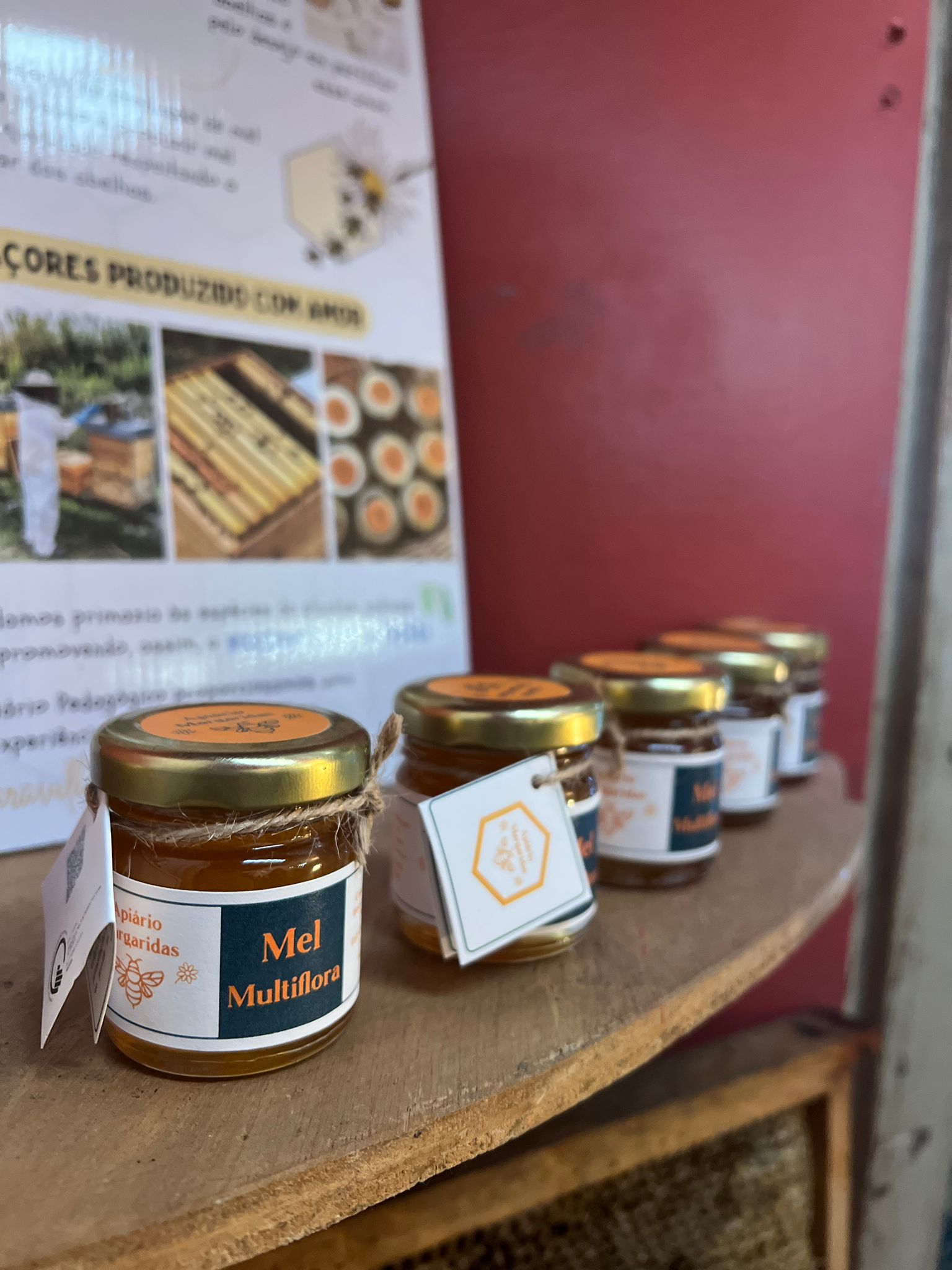
Small jars of Mel Multiflora with the Apiário Margaridas label

Mel Multiflora

Multifloral honey · São Miguel

Produced by Apis mellifera iberiensis, the Iberian honeybee native to the region. The bees forage clover, daisies — margaridas — and whatever else flowers in the meadow they live in. Available at the apiary.

Beeswax candles

Made from beeswax produced at the apiary.

Available at the apiary

Tasting at the visit

Every visit ends with a honey tasting under the open sky.

Included · €37.50

Part of the Laurelim research project

Apiário Margaridas contributes to Laurelim, a research project studying honey produced in the context of laurel forests and its relationship with biodiversity, bee microbiome, and chemical composition.

Come spend two hours with the bees.

Wednesdays and Fridays at 10:30, by appointment. Other days possible on request.

Book a visit
Chat on WhatsApp